Window treatments are almost always an afterthought.
They’re the “we’ll figure that out later” decision—after furniture, finishes, and layout are already locked in.
And I get it. They don’t feel as exciting.
But here’s the truth: window treatments are one of the most important layers in interior design.
They control the light. They impact the mood. They’re often the difference between a space that looks good… and one that actually feels right.
Why Window Treatments Matter More Than You Think
A room can look beautiful on paper.
Great furniture. Thoughtful layout. Solid finishes.
But without the right window treatments or custom drapery, something always feels slightly off.
Too bright in the morning. Too exposed at night. A little unfinished all the time.
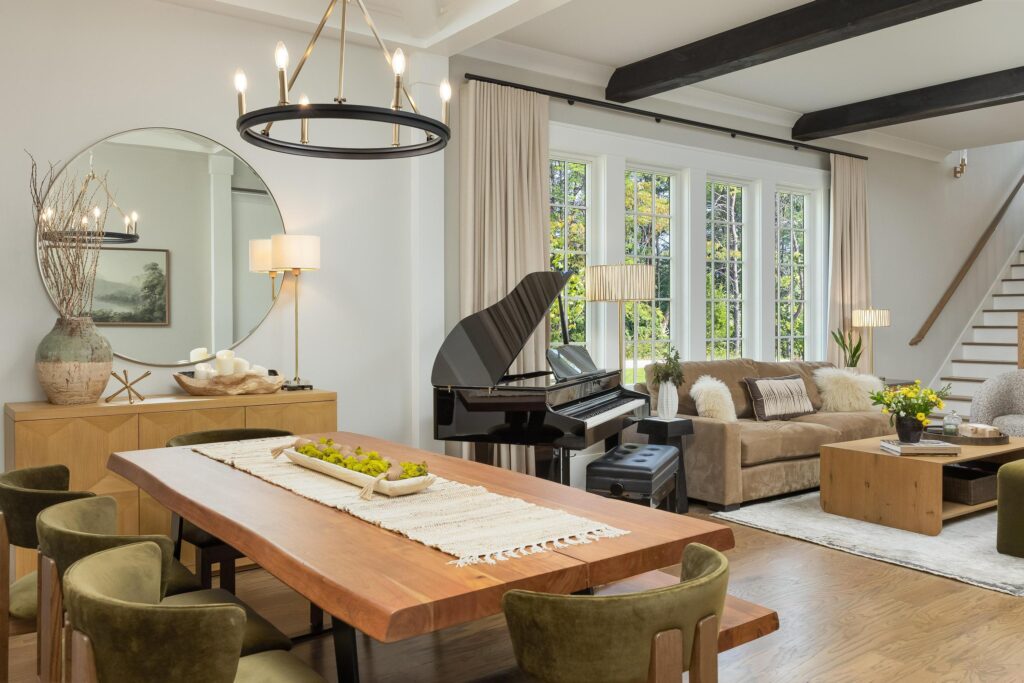
That’s because window treatments shape natural light, privacy, and comfort, influencing how your home feels throughout the day.
The Most Common Window Treatment Mistake
When window treatments are left until the end of a project, a few things usually happen:
- They don’t align with the overall interior design
- The scale feels off (too small, too heavy, or poorly placed)
- Light control and privacy aren’t fully considered
- Installation becomes more complicated than it needed to be
And none of this happens because of poor choices.
It happens because the decision came too late.
What We’re Actually Designing For
When we design custom window treatments, we’re not just thinking about how they look; we’re thinking about how your home needs to function.
- Soft, filtered light in the morning
- Privacy and comfort in the evening
- Flexibility throughout the day
This is where layered window treatments come in:
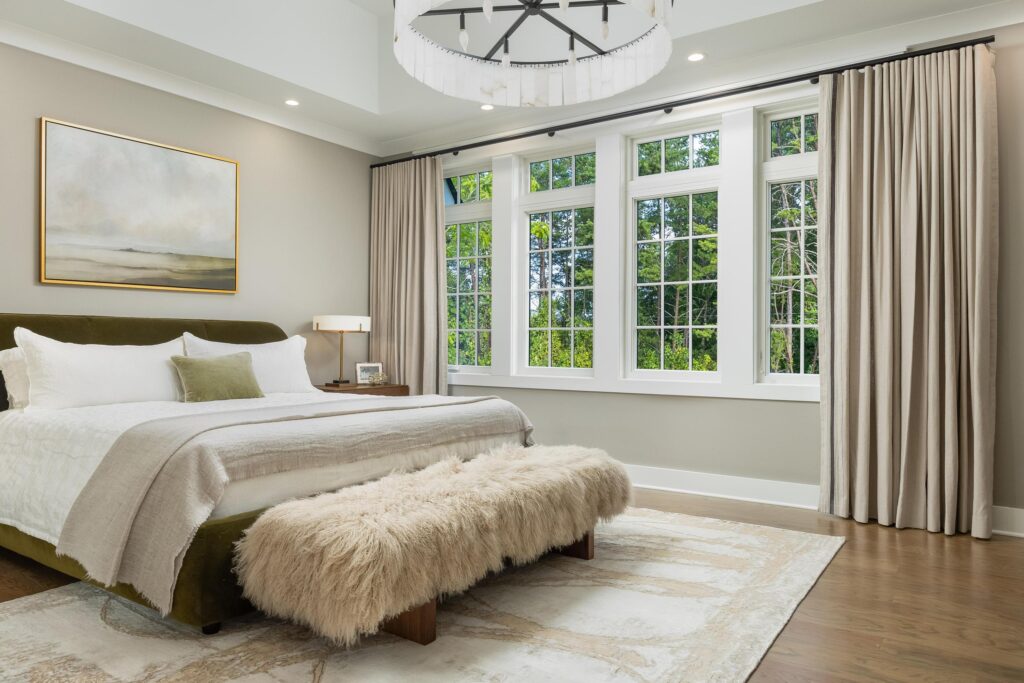
- Sheer panels to diffuse natural light
- Drapery panels to add warmth and depth
- Layered solutions for both light control and privacy
This is what creates a space that feels calm, intentional, and livable.
The Detail Most Homeowners Miss
Scale.
This is one of the most overlooked elements in window treatment design, and it makes a significant difference.
Hanging drapery higher and wider than the window frame can make ceilings feel taller and the room feel larger.
When proportions are off, the entire space can feel smaller or unbalanced.
This is why window treatments should relate to the architecture of your home, not just the window itself.
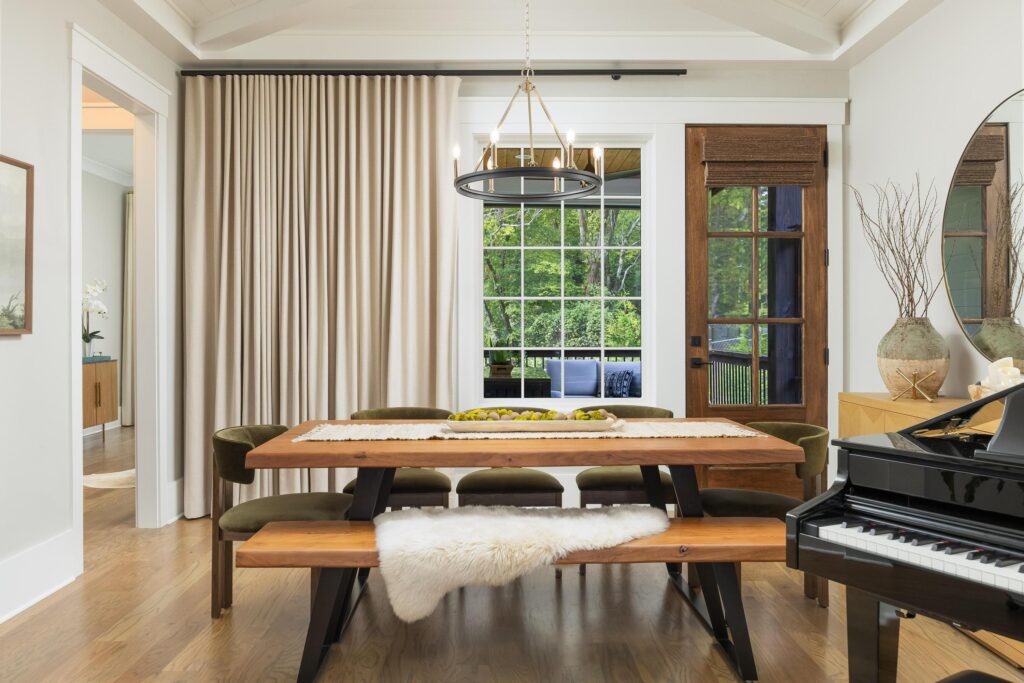
Window treatments aren’t a finishing touch.
They’re a foundational part of thoughtful home design.
When they’re considered early, your space feels cohesive, balanced, and complete.
When they’re not, you feel it, even if you can’t quite explain why.
If you’re designing or renovating your home and want every detail to feel intentional, working with an experienced interior designer in Chattanooga can help ensure nothing is overlooked. Inquire with us.