Some spaces are easy to define. Kitchens are designed for cooking, living rooms for gathering, and dining rooms for meals around the table.
But occasionally, a space needs to do more than one thing.
That was exactly the case with this four seasons room. This sunroom needed to function as both a dining area and a relaxed living space, all while maintaining the light-filled, easy atmosphere that makes sunrooms so appealing.
Designing a room that works double duty requires thoughtful planning. The goal is to allow each zone to serve its purpose without feeling like two spaces competing for attention.
Here’s a closer look at the before, during, and after of designing a four seasons room.
Before the Design: A Bright Sunroom Without a Clear Purpose
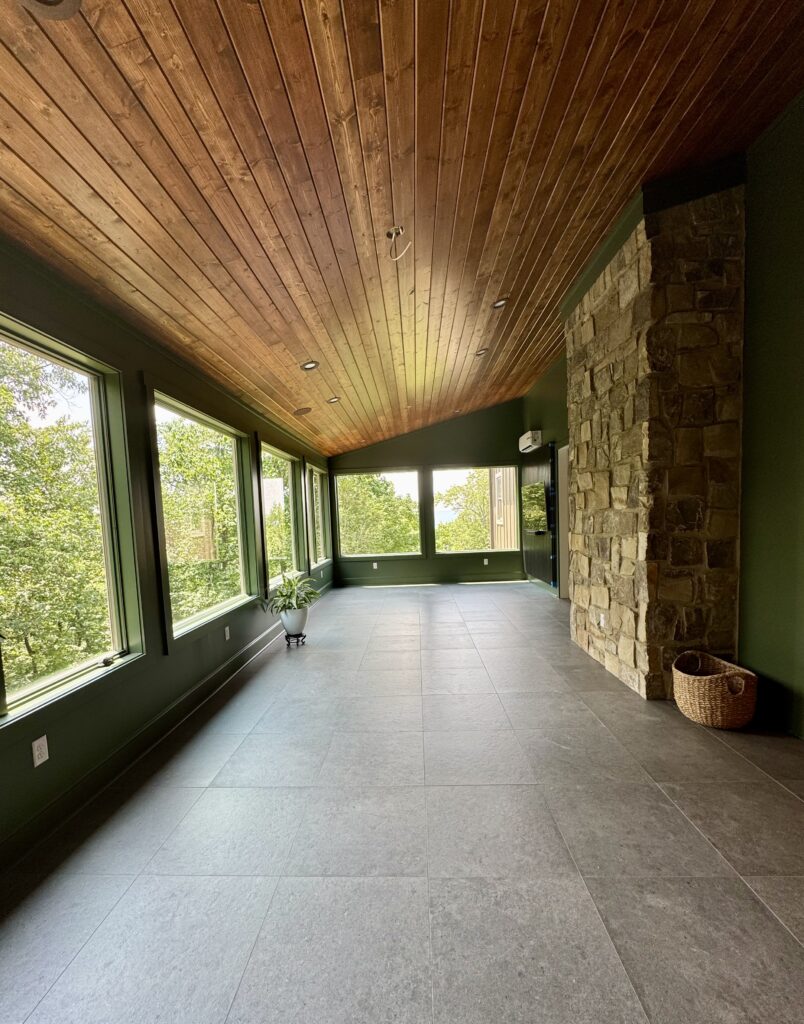
The sunroom offered wonderful natural light with large windows and a beautiful view, but it lacked a clear function.
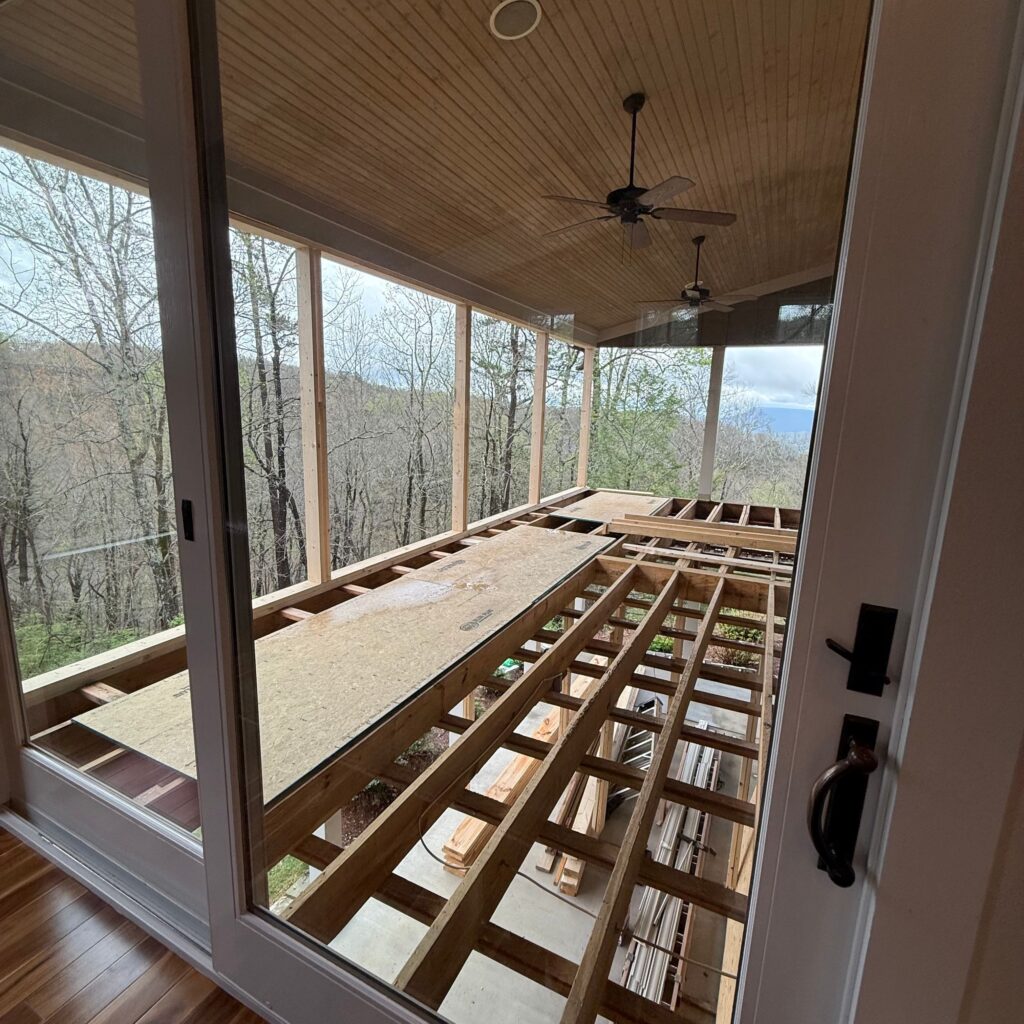
Like many sunrooms, the space felt somewhat transitional. While it had potential, the layout didn’t encourage people to gather or spend time there. It wasn’t fully supporting the way the space could be used.
This is a common challenge in sunrooms and enclosed porch-style spaces. The architecture creates a beautiful environment, but without intentional design decisions, the space can feel underutilized.
The Vision for a Four Seasons Room That Supports Dining and Relaxation
Before beginning the design process, we clarified how the room needed to function. Once we established that it should accommodate both dining and relaxing, the design direction became much clearer.
The design goals for the four seasons room included:
- Creating a comfortable dining space for everyday meals and gatherings
- Designing a relaxed seating area for conversation and quiet moments
- Ensuring both zones felt connected visually and stylistically
- Maintaining a strong relationship to the surrounding landscape
Ultimately, the design needed to feel separate but connected — defined, yet easy.
During the Design Process: Defining Zones Within the Sunroom
One of the biggest challenges when designing a multi-functional room is creating distinct areas without breaking up the openness that makes the space special.
For this project, the strategy was to use a consistent color palette, rich layers of texture, and intentional furniture placement so that each zone functions independently, but reads as one harmonious environment.
Anchoring the Dining Area
The dining zone became the visual anchor of the room.
We centered the space around a substantial dining table, paired with sculptural lighting overhead. Warm, tactile materials help ground the area and give it a clear sense of purpose within the room.
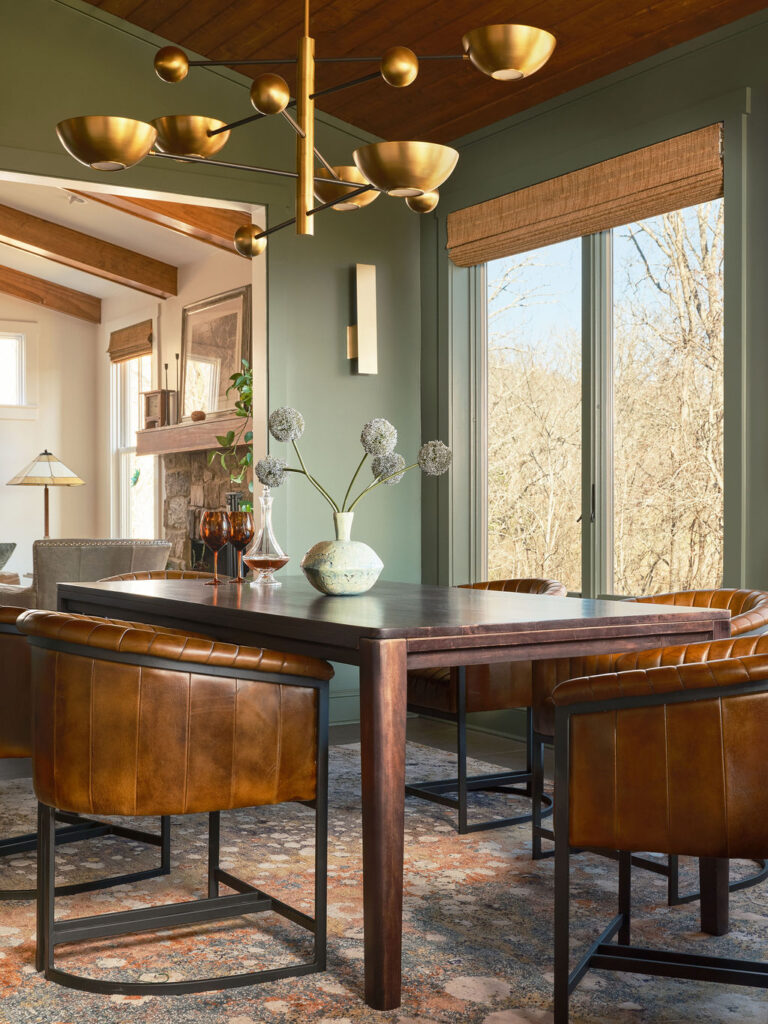
By establishing this strong focal point, the dining area feels intentional and inviting. It’s a place where people naturally gather.
Creating Flow Between the Dining and Living Areas
Just beyond the dining table, the space transitions into the living area.
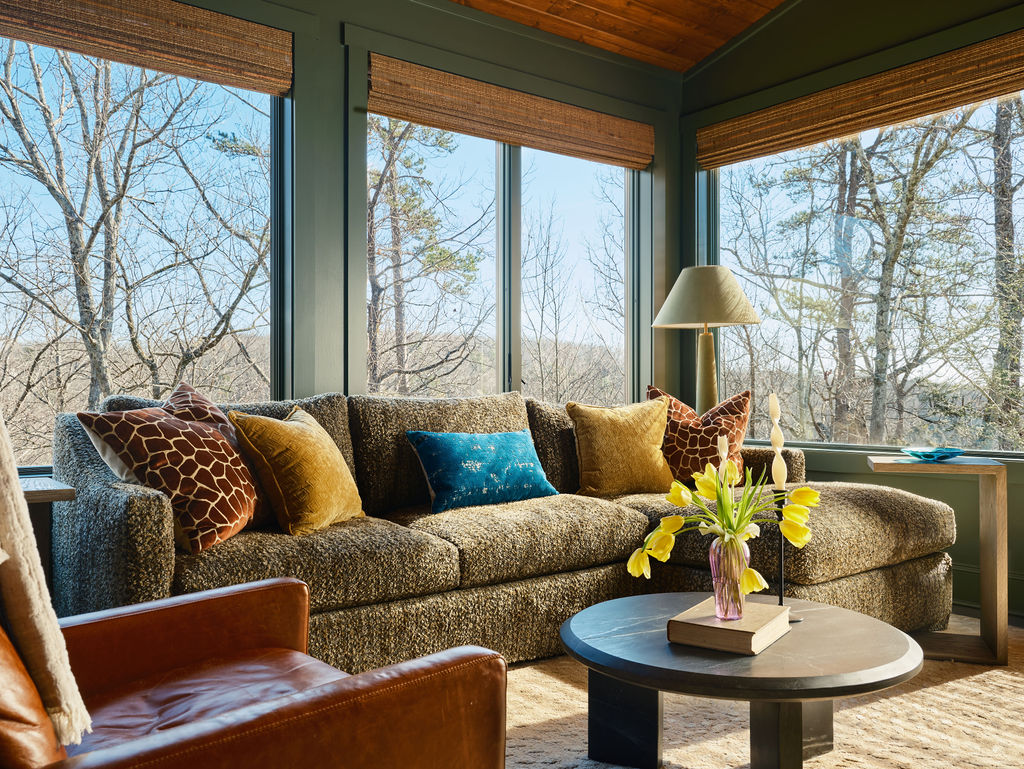
We designed this space around comfort and conversation. Carefully scaled furnishings ground the room while still preserving the natural light and openness of the space.
After the Transformation: A Four Seasons Room That Feels Balanced and Inviting
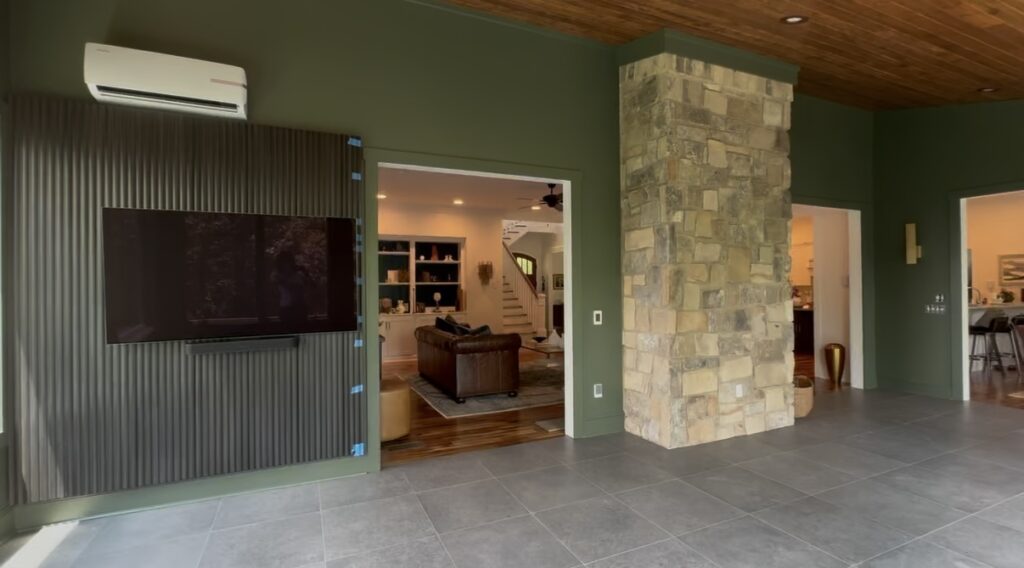
With thoughtful zoning and cohesive design choices, the sunroom feels balanced and connected.
The consistent color palette and complementary finishes allow the dining and living areas to read as one unified space, even though each zone serves its own role.
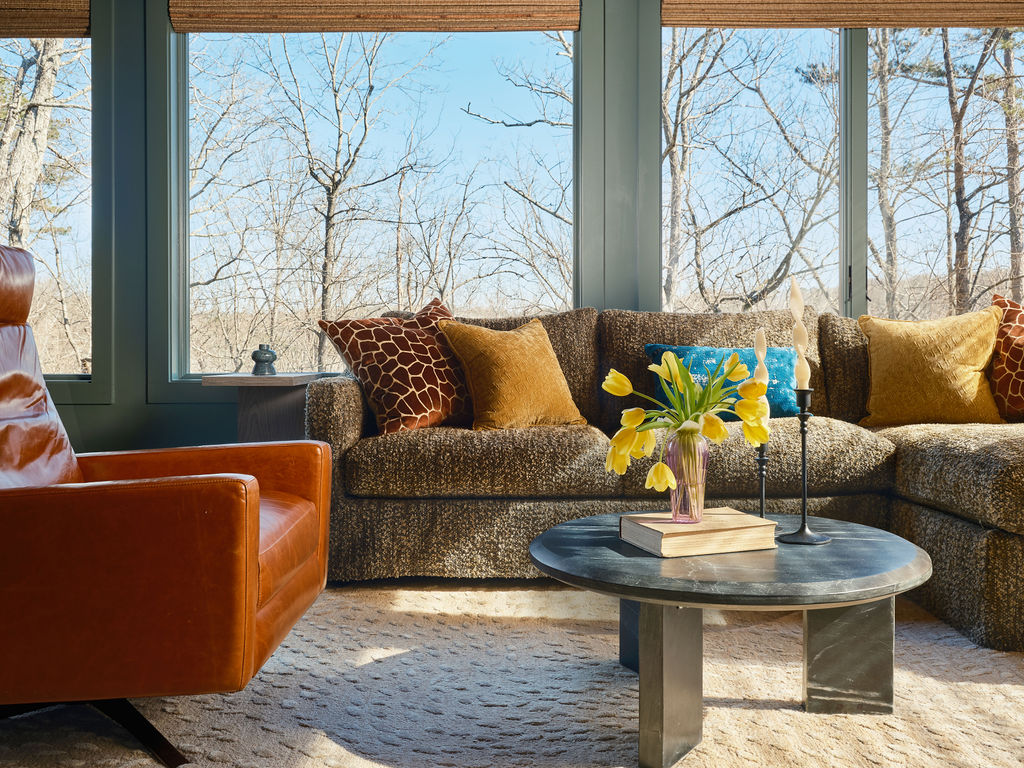
The layout feels natural and effortless, and the spaces work together rather than competing for attention.
The dining area provides a welcoming place for meals and gatherings, while the living space offers a comfortable setting for conversation, reading, or simply enjoying the views outside.
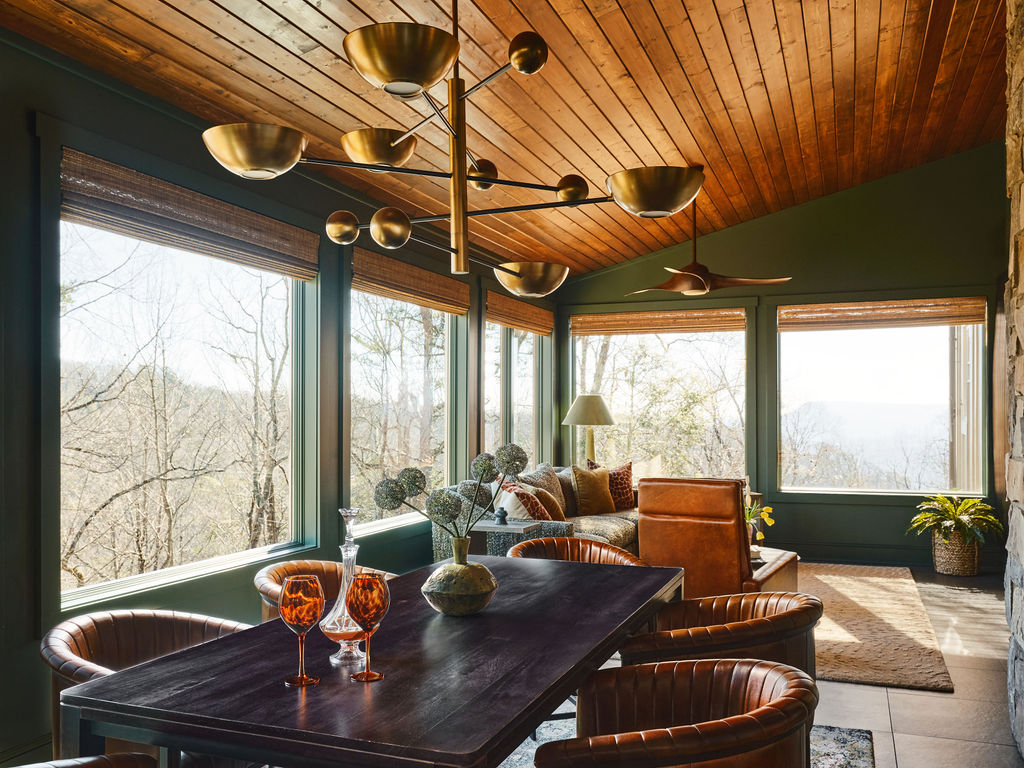
The large windows continue to bring in beautiful natural light throughout the day, while layered materials and warm finishes ensure the space feels comfortable and grounded year-round.
The finished result is a room that feels defined but not rigid, flexible yet intentional.
Solving the Challenges of Multi-Functional Room Design
Designing a multi-functional room is not just about placing furniture — it’s about making intentional decisions around layout, scale, and how each area will be used throughout the day.
When these decisions are made thoughtfully, the result feels natural and intuitive, creating a space that supports multiple uses without feeling overdesigned or disconnected.
The four seasons room is a clear example of how thoughtful design can transform an underutilized space into one that feels both functional and inviting.
If you’re navigating designing a space with multiple needs, inquire with us to see how we can help create a room that feels cohesive, functional, and easy to live in.